
As our parents and grandparents age, their needs begin to change. The everyday tasks that once felt effortless—like bathing, taking medicines, cooking meals, or moving around the house—can become overwhelming. Many families find themselves at a crossroads at this stage:
Should we hire a caregiver, or do we need nursing care at home?
Both options come with their advantages, responsibilities, and long-term implications. Choosing the right path depends on the senior’s health condition, emotional needs, lifestyle, and the support a family can realistically provide.
In this guide, we’ll break down everything you need to know so you can make a confident, informed decision.
1. Understanding the Difference: Caregiving vs. Home Nursing
What is a Caregiver?
A caregiver focuses on daily living support and emotional well-being, not medical treatment. Their goal is to ensure seniors live independently and comfortably at home.
Tasks typically include:
- Personal hygiene assistance (bathing, dressing, grooming)
- Meal preparation and feeding
- Light housekeeping
- Medication reminders (not administration)
- Mobility assistance (wheelchair, walking)
- Companionship and emotional support
- Escorting to doctor visits
Caregivers are trained in elderly care, but they do not perform medical procedures.
They are ideal when your loved one needs support, not clinical intervention.
What is a Home Nurse?
A home nurse is a medically trained professional—usually a Registered Nurse (RN), Auxiliary Nurse Midwife (ANM), or General Nursing & Midwifery (GNM) professional. They provide clinical care at home.
Nursing duties may include:
- Wound dressing and post-surgical care
- IV/IM injections
- Catheter insertion or management
- Diabetes/insulin management
- Monitoring vital health parameters
- Tube feeding (NG/Ryle’s)
- Tracheostomy care
- Oxygen support
- Administering medications
Nursing professionals are essential when a senior has medical conditions that require ongoing, technical care.
2. Who Needs a Caregiver?
A caregiver is best suited for functional support, companionship, and monitoring.
Ideal situations for caregiving:
- Elder with mobility challenges
- Seniors recovering from mild illness
- Early-stage dementia or Alzheimer’s
- Frail parents living alone
- Need for home help due to age-related weakness
- Families living away due to work
Caregivers are not only supportive—they help seniors maintain dignity and independence.
For many elderly people, having someone patient, kind, and attentive makes a huge emotional difference.
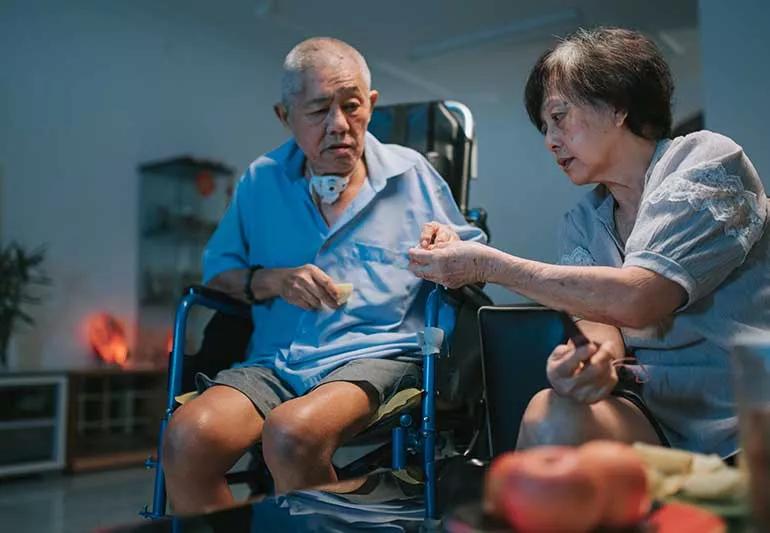
3. Who Needs a Home Nurse?
4
Home nursing is the right choice when the senior has medical or chronic conditions that require professional attention.
Ideal situations for nursing care:
- Post-surgery recovery
- Long-term bedridden patients
- Stroke rehabilitation
- Cancer care
- Parkinson’s or advanced dementia
- Tube feeding or tracheostomy care
- Pressure sore management
- Serious injuries or disability
- Hospice or palliative care
Nursing helps prevent hospital readmissions and speeds up recovery with clinically supervised assistance.
4. Emotional Wellness vs. Medical Safety
One major difference between caregivers and nurses lies not in their skills, but in their purpose.
Caregivers enhance quality of life
They provide social connection, routine, and mental wellness.
Many seniors experience loneliness, anxiety, or helplessness. A caregiver:
- Talks to them
- Engages them in light activities
- Encourages movement
- Provides emotional security
Often, what families overlook is that seniors don’t only need medical care—they need human connection.
Nurses protect medical stability
A nurse focuses on treatment, recovery, and clinical safety.
They play a crucial role in:
- Detecting early warning signs
- Coordinating with doctors
- Administering interventions properly
A nurse offers peace of mind especially when the patient’s condition is complex or unstable.
5. Cost Comparison: Which Is More Affordable?
While costs vary by city, experience, duration, and complexity of care, here is a simple guideline:
Caregiver costs:
- Typically lower compared to home nursing
- Fees depend on 8/12/24-hour care
- Skills (dementia care, mobility support) increase pricing slightly
Home nurse costs:
- Higher due to medical qualifications
- Charges depend on training level and clinical duties
- Post-surgical or ICU-like home care increases costs further
Important:
Choosing only based on price is a mistake.
If your parent needs medical supervision, a caregiver alone will not be enough—and delaying nursing care can worsen health outcomes.
6. Safety & Professional Competence
Caregiver Safety Parameters
- Background checks
- Personality and patience
- Hygiene discipline
- Ability to handle emergencies (calling ambulance, first aid)
Nursing Safety Parameters
- Medical certification verification
- Clinical competency (injections, vitals, equipment)
- Experience in elderly or specific disease conditions
- Emergency protocols
When hiring from a professional agency, you also get:
- Replacement in case of absence
- Training support
- Performance monitoring
- Legal and onboarding compliance
This is far safer than hiring independently without verification.
7. Daily Life with a Caregiver: What It Feels Like
Imagine your mother is living alone. She doesn’t want to leave her home, her plants, or her neighbors. But cooking, bathing, medicines, and getting groceries are becoming tough.
A caregiver arrives in the morning:
- Helps her bathe safely
- Prepares breakfast and medications
- Does light cleaning
- Keeps her company
- Helps her walk or do mild exercise
- Escorts her to the doctor
Your mother feels:
- Independent, not hospitalized
- Engaged emotionally
- Less afraid of falling or being alone
This is the soft side of elderly care that families often value the most.
8. Daily Life with a Nurse: What It Feels Like
Now imagine your father had knee-replacement surgery. The doctor has advised:
- wound dressing
- physiotherapy assistance
- pain medication
- infection monitoring
- blood pressure tracking
A trained nurse:
- Checks vitals every few hours
- Changes dressings properly
- Ensures medication schedule
- Helps with mobility and prevent falls
- Alerts the family or doctor if something looks unusual
Your father:
- Recovers in his own bed
- Avoids unnecessary hospital trips
- Receives ongoing medical supervision
This is critical when clinical healing matters more than routine.
9. Hybrid Care: The Best of Both Worlds
In many cases, the solution isn’t either-or—it’s both.
For example:
- A senior recovering from surgery may need a nurse for 1–2 months
- After recovery, switching to a caregiver makes more sense
Or
- A dementia patient may need a caregiver for daily support
- A nurse may visit weekly or monthly for medical treatment
Hybrid models balance:
- Emotional comfort
- Financial practicality
- Professional safety
Good agencies will guide you based on the condition—not just sell a single service.
10. What Families Need to Consider Before Choosing
1. Medical Diagnosis
Has the doctor recommended clinical support?
If yes → nurse.
2. Daily Functioning
Can the senior bathe, eat, walk, or move independently?
If no → caregiver.
3. Duration of Support
Short-term medical treatment? → home nurse.
Long-term wellness or companionship? → caregiver.
4. Family Availability
Are you or siblings available?
- No → hire consistent help.
- Yes → combine partial caregiving support.
5. Mobility & Environment
Stairs, slippery bathrooms, or clutter increase fall risks → caregiver + nurse intervention.
6. Emotional Comfort
Some seniors don’t respond well to medical environments → caregiver as primary.
7. Budget
Plan realistically but don’t compromise on medical necessity.
11. Mistakes Families Commonly Make
- Hiring a caregiver for medical needs
Example: expecting a caregiver to do injections or tube feeding. - Calling a nurse for loneliness or simple daily routines
This overcomplicates care and increases cost unnecessarily. - Avoiding help until a crisis happens
Many hospitalizations are caused by falls, dehydration, or missed medicines. - Trying to manage everything alone
Family fatigue is real. Burnout damages relationships and mental health.
12. How Home Care Services Improve Dignity
Elderly care is not only about tasks—it is about dignity.
Seniors do not want to feel like a burden.
They don’t want their children exhausted and stressed.
A supportive caregiver or nurse can bridge this emotional gap.
They can help seniors:
- Stay in their own home
- Maintain routine and familiar surroundings
- Preserve independence and pride
- Avoid unnecessary hospitalization
13. When to Upgrade from Caregiver to Nurse
You may start with a caregiver and later realize medical help is needed.
Warning signs include:
- Sudden memory loss or disorientation
- Uncontrolled diabetes
- Stroke symptoms
- Repeated falls
- Wounds not healing
- Bed sores
- Repeated infections
- Severe weight loss
- Chronic difficulty swallowing
At this stage, home nursing becomes essential.
14. When to Downgrade from Nurse to Caregiver
Once health stabilizes:
- Post-surgery wounds heal
- Mobility improves
- Tube feeding stops
- Pain reduces
Then you can safely transition to caregiver support.
This gives emotional continuity while reducing cost.
15. Why Many Families Choose Home Care Over Hospitals
Seniors prefer familiar surroundings.
Home care can be:
- Less stressful
- More dignified
- Easier for family visits
- Better for mental health
- More cost-efficient in the long run
The right professional at home can deliver peace, recovery, and companionship.
Final Thought: Choose What Supports Life, Not Just Survival
Aging is not a disease.
It’s a journey that deserves respect, patience, and humanity.
Whether you choose a caregiver or a nurse, the goal is the same:
Help your loved one experience safety, warmth, and dignity in the place they call home.
If you’re unsure what your family needs, speak to a trusted home care agency.
They can guide you honestly based on medical reports, personality, and your family’s emotional expectations.